SANJ / RING & TRACK SYSTEMS
Inspection & Acceptance Planning
Define rail dimensions, carriage setting, station repeatability and functional checks for a custom track system. Agree measurable acceptance criteria with SANJ.
What should be checked on a custom track system?
Check the rail geometry, mounting interfaces, carriage behaviour, joints and required station location under the agreed load and operating conditions. Use the same datum, test procedure and drawing revision for supplier and customer acceptance.
Four useful acceptance groups
- Dimensional: profile, diameter reference, hole positions, straight lengths and assembly envelope.
- Mechanical: carriage setting, joint transition, drive connection, fixture clearance and lubrication access.
- Motion: travel behaviour, move time, settling time and repeatability at agreed stations.
- Delivery: component identification, drawing revision, agreed documentation and packaging.
Keep accuracy claims in their proper scope
The supplied company brochure reports overall secondary positioning accuracy of ±0.05 mm and slider flatness of ±0.01–0.03 mm. These are brochure statements, not a rating for every rail model or a test certificate for a proposed system. Specify the mechanism, datum, load and test conditions before agreeing a project target.
Review requirements before ordering
Tell us whether the application needs moving accuracy, repeatability after stopping or repeatability after an additional station-locating mechanism engages. Include the measuring point and process forces. Those are different requirements and should not be reduced to one unqualified accuracy figure.
Read the positioning specification guide →
INSIDE SANJ / FACTORY PHOTOGRAPHS
Keep the physical interfaces in view
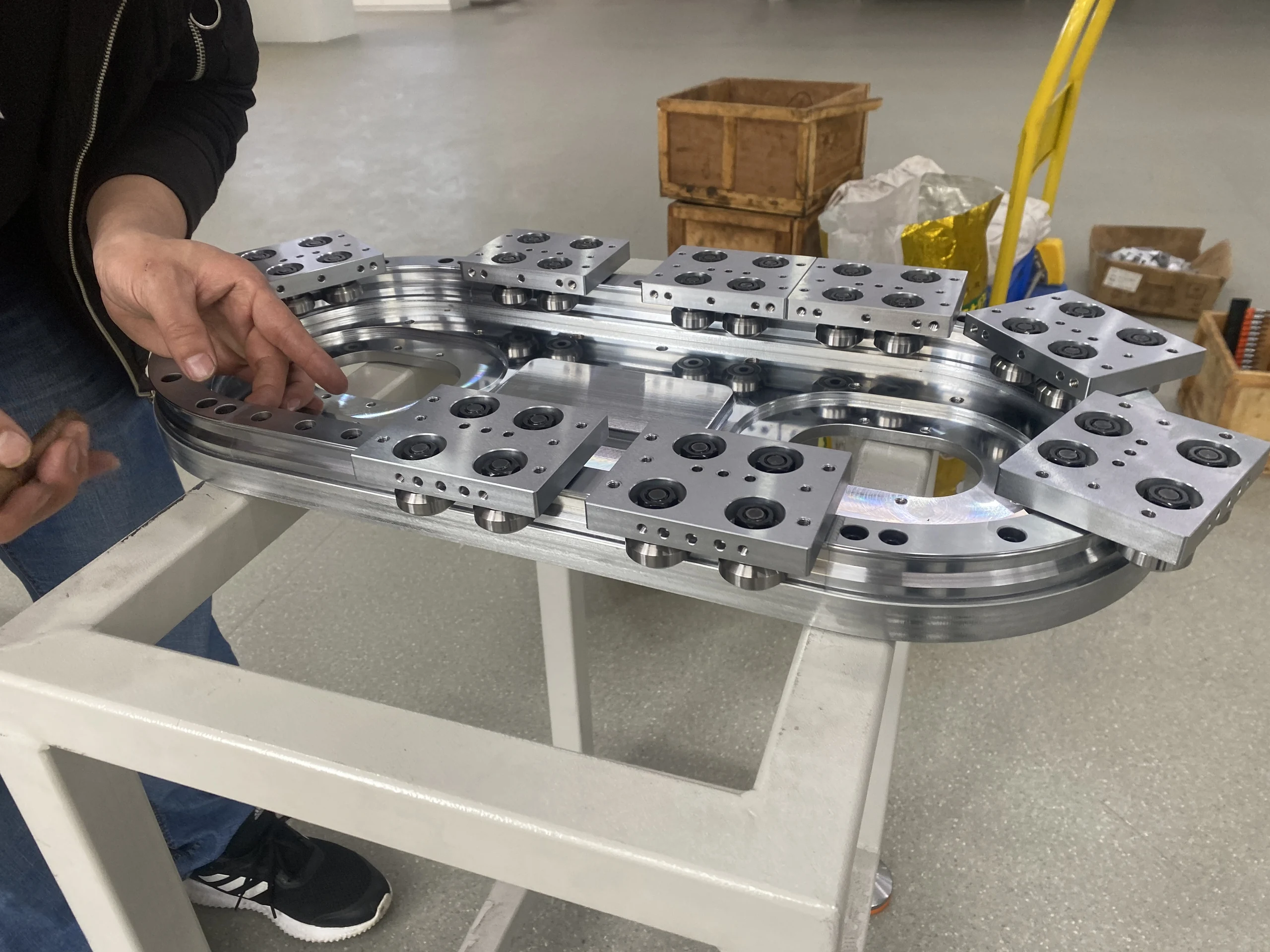
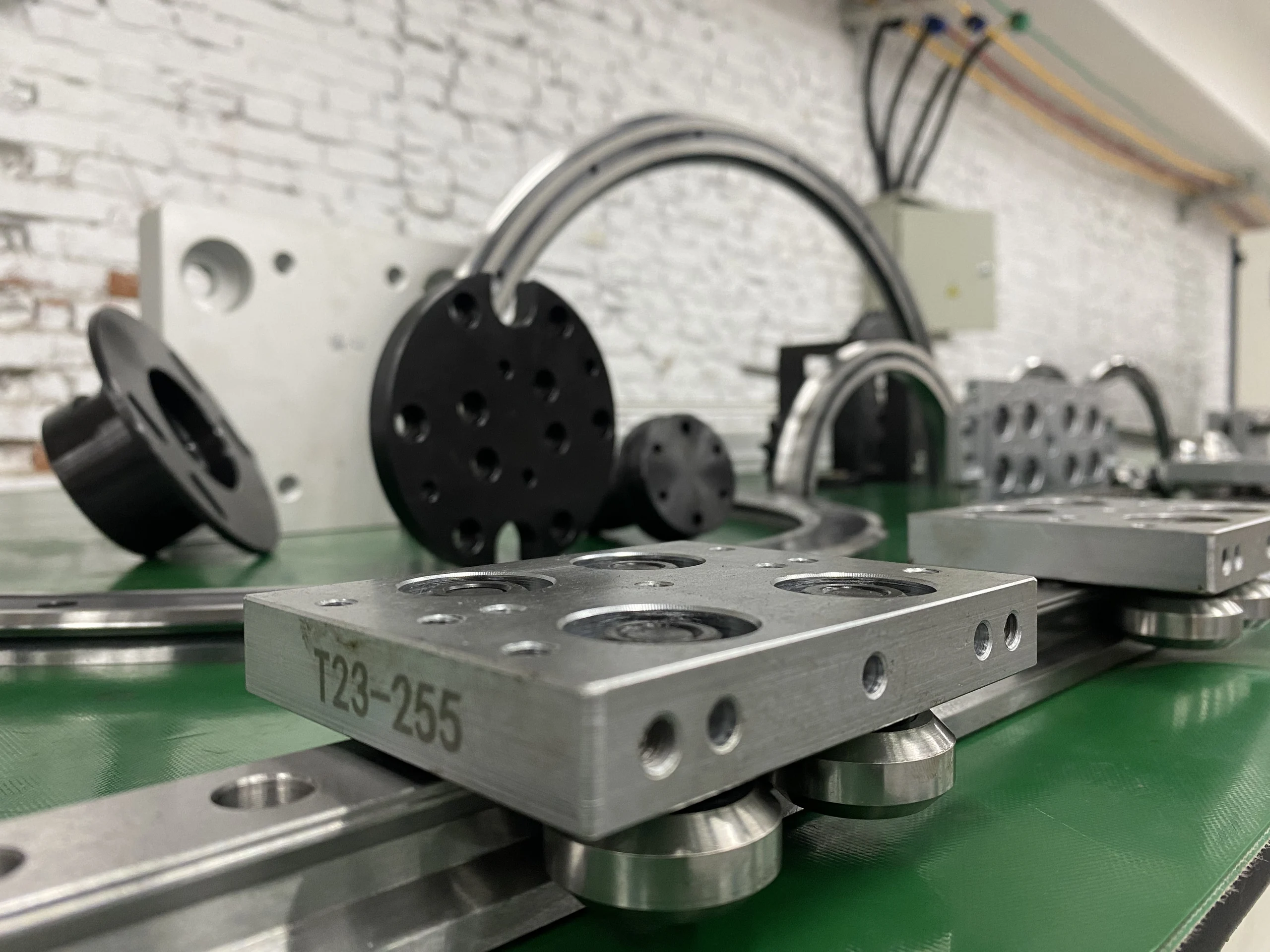
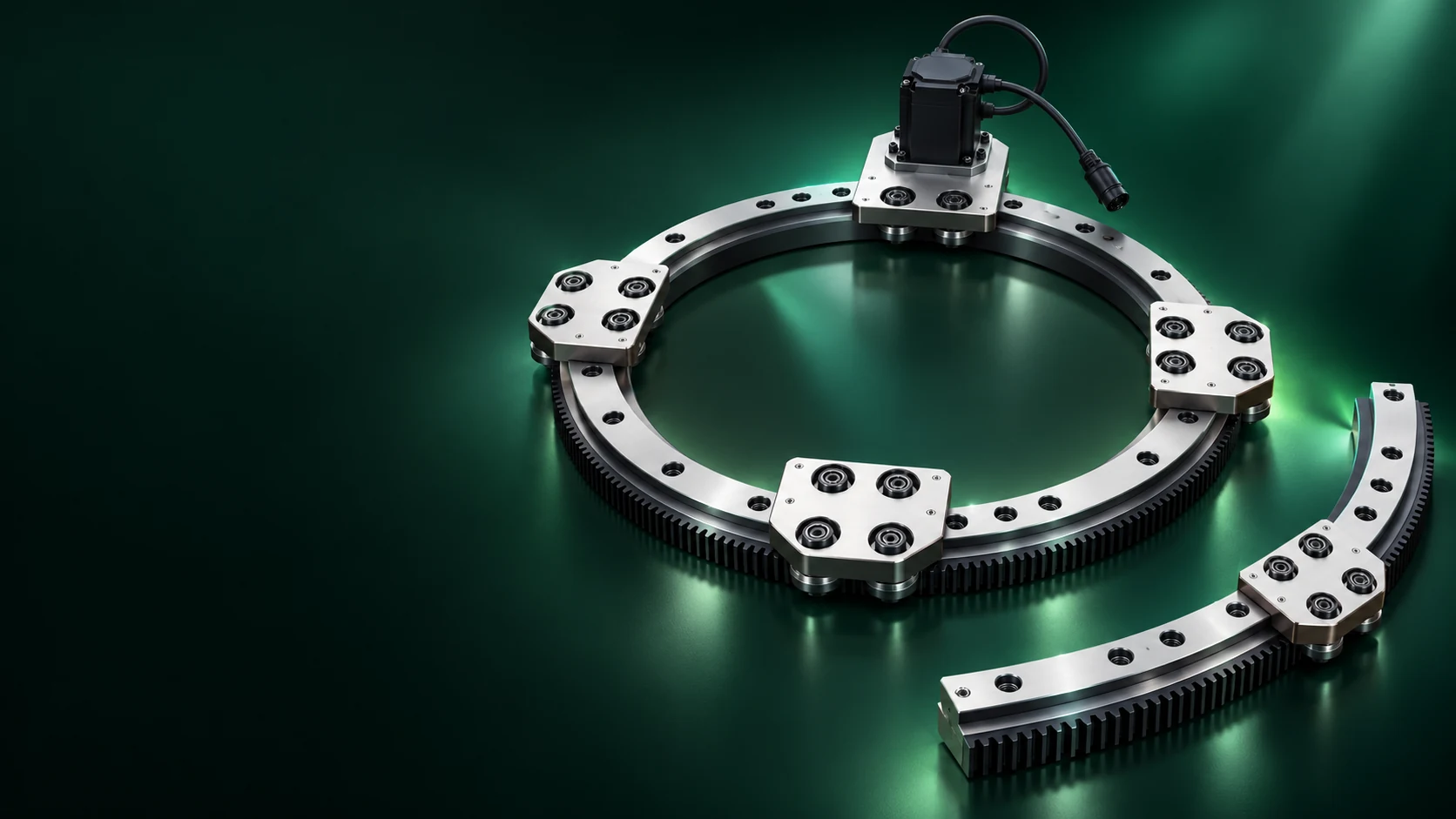
These assembly photographs show the carriage and rail interfaces discussed during project acceptance planning. The agreed inspection plan defines the actual measurements and records.